

Researchers who want to use biosamples must submit a request that explains:
- The purpose of the research
- How the sample will be used
- Why the research is scientifically and ethically appropriate
Privacy and confidentiality
Protecting patient privacy is our number one priority. Personal information is handled according to privacy laws and regulations, and safeguards are in place to limit access to sensitive data.

Ethics and oversight
The use of biosamples is guided by strict ethical standards. Review boards and expert teams evaluate research requests to ensure they meet scientific, ethical, and patient-consent requirements.

Restricted access
Only authorized researchers and teams who have received appropriate approvals can access biosamples – and only for the purposes you’ve agreed to.
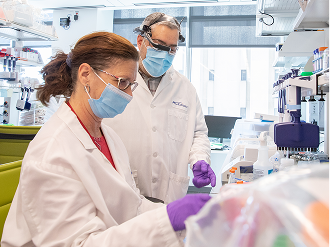
Your Consent Guides Every Use:
- Approved scientific research
- Learning more about diseases
- Supporting the development of future treatments
All use must align with the informed consent you provide.
What Your Biosamples Will Not Be:
- Sold for commercial purposes
- Used for unapproved research
- Used in a way that identifies you personally

Disease causes and progression
By studying biosamples such as blood or tissue, researchers can identify markers (called biomarkers) that show how a disease develops and changes over time. This knowledge helps uncover new ways to treat disease.

Accurate diagnosis
Biosamples help doctors diagnose diseases more accurately. Certain proteins or genetic changes found in samples can confirm the presence of specific conditions, helping patients receive the right care sooner.

Testing drugs
Researchers use biosamples to study how potential treatments interact with the body. This can help predict whether a drug may be safe and effective before it is given to patients.

Tailored medical care and targeted therapies
Biosamples support precision medicine – an approach that tailors treatment based on a person’s unique biology. For example, studying genetic information from biosamples can help identify treatments that are more likely to work for certain patients, rather than relying on a one-size-fits-all approach.
Knowing there are clear rules around how my sample is used makes me feel respected and more comfortable with my decision.
Actual patient living with lupus nephritis
